Finally, after several years of waiting, Denmark hosted an airshow mid September this year at Aalborg Air Base (Flyvestation Aalborg / FSNAAL). I was there, I had to, as I have been fascinated by military planes since being a boy, growing up near by.
I had the honor of being interviewed for television (though I don’t think the interview was used). They asked what the highlights for me were, and I must say, that it was seeing actual flying de Havilland DH100 Vampires. Lets dive into why.
Vampires at the Airshow
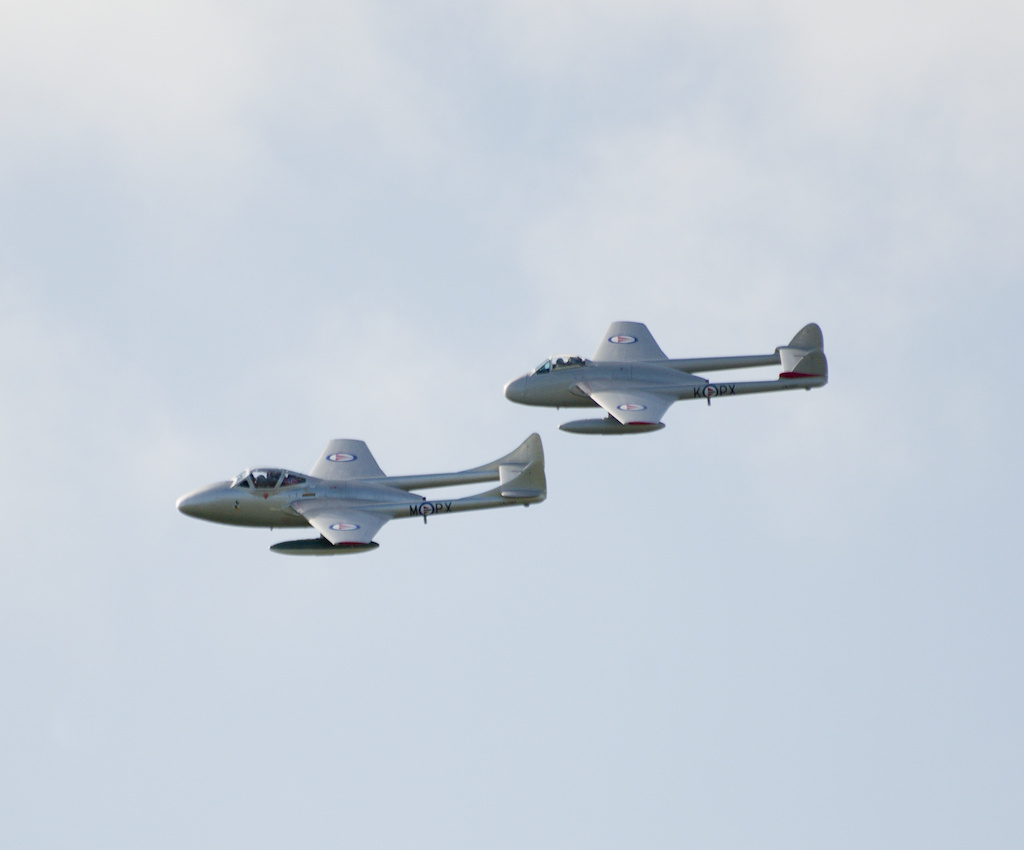
Above are the Norwegian Vampires LN-DHZ and LN-DHY. The leading is the U-1230 model T.55 export trainer followed by J-1196 model FB.52.
The Vampires are special because they are actual WW2 era jet fighters. The first production version of the Vampire flew late April 1945 (the first prototype flew two years prior).
Vampires are built around the de Havilland Goblin jet engine. This is a centrifugal compressor engine, and when the Vampires warmed up and taxied, you could smell jetfuel all over the display area. I love the smell of jetfuel in the morning!
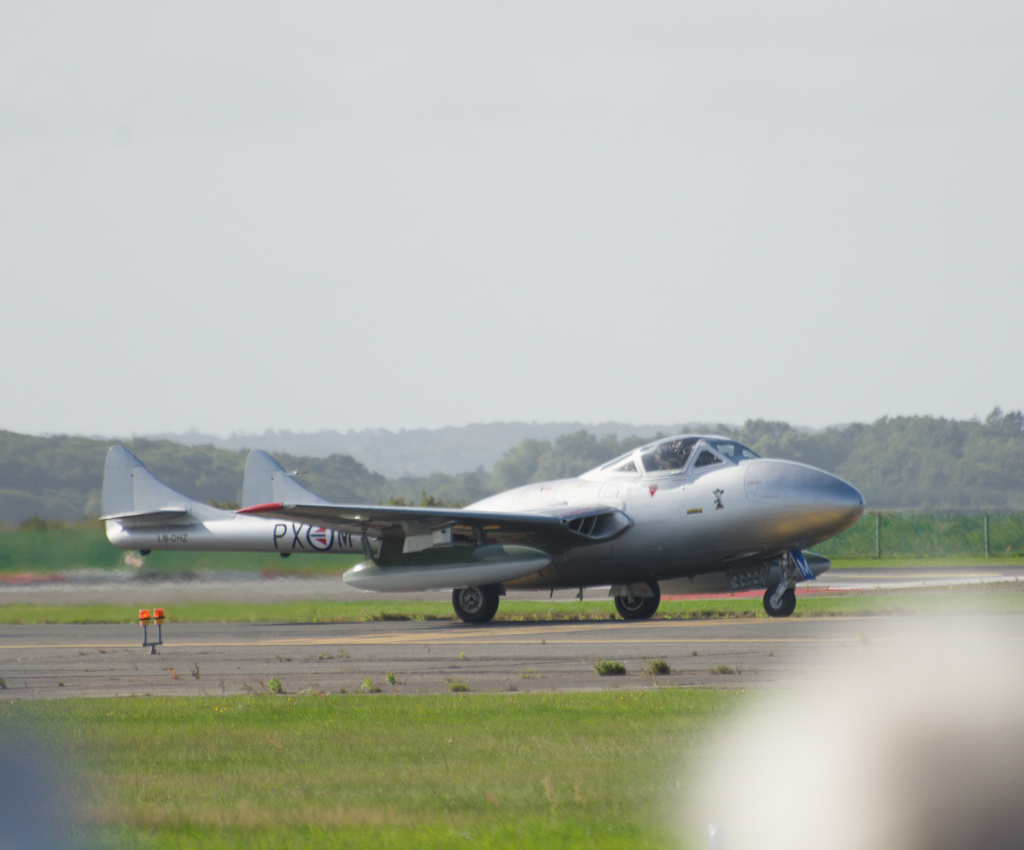
I was very impressed with how well the Vampires flew, which both is a testament to the engineering of the airframe and the engine, but very likely also to pilot skills.
Also very distinct was the sound of the centrifugal compressor. It is with planes as with birds, you often hear them before you see them, and you learn how to distinguish between common variants and the one worth looking out for. And the sound of the Vampires was like nothing else.
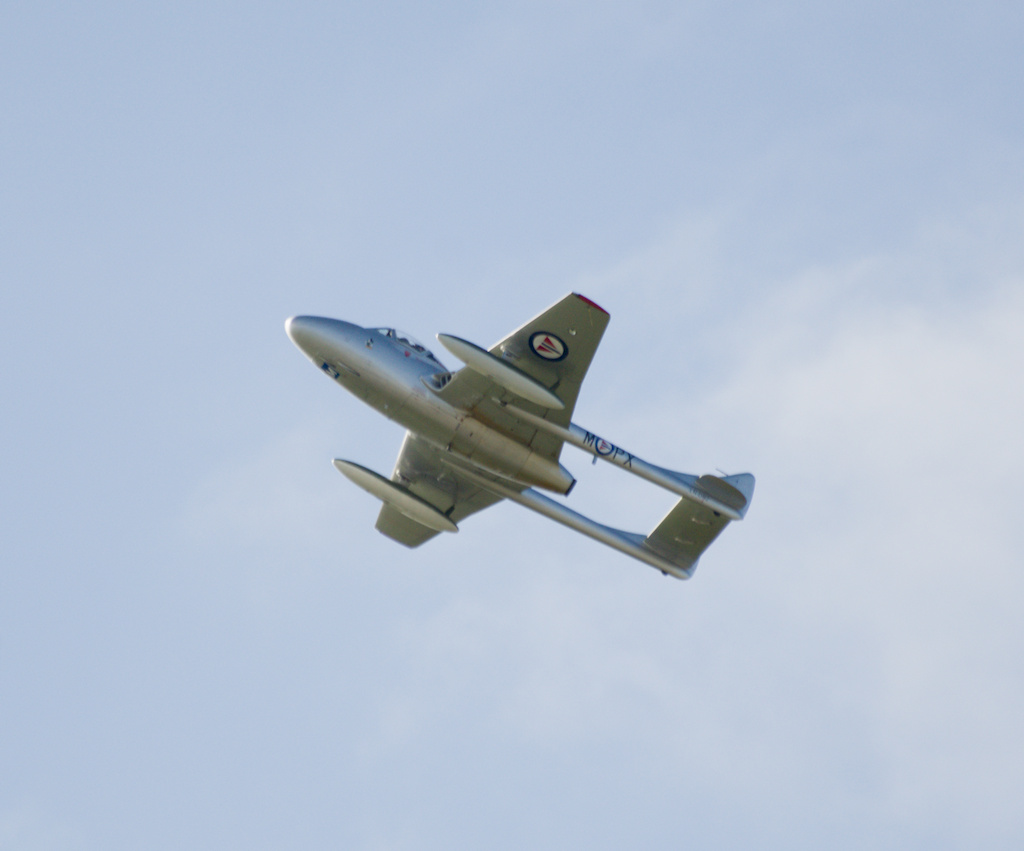
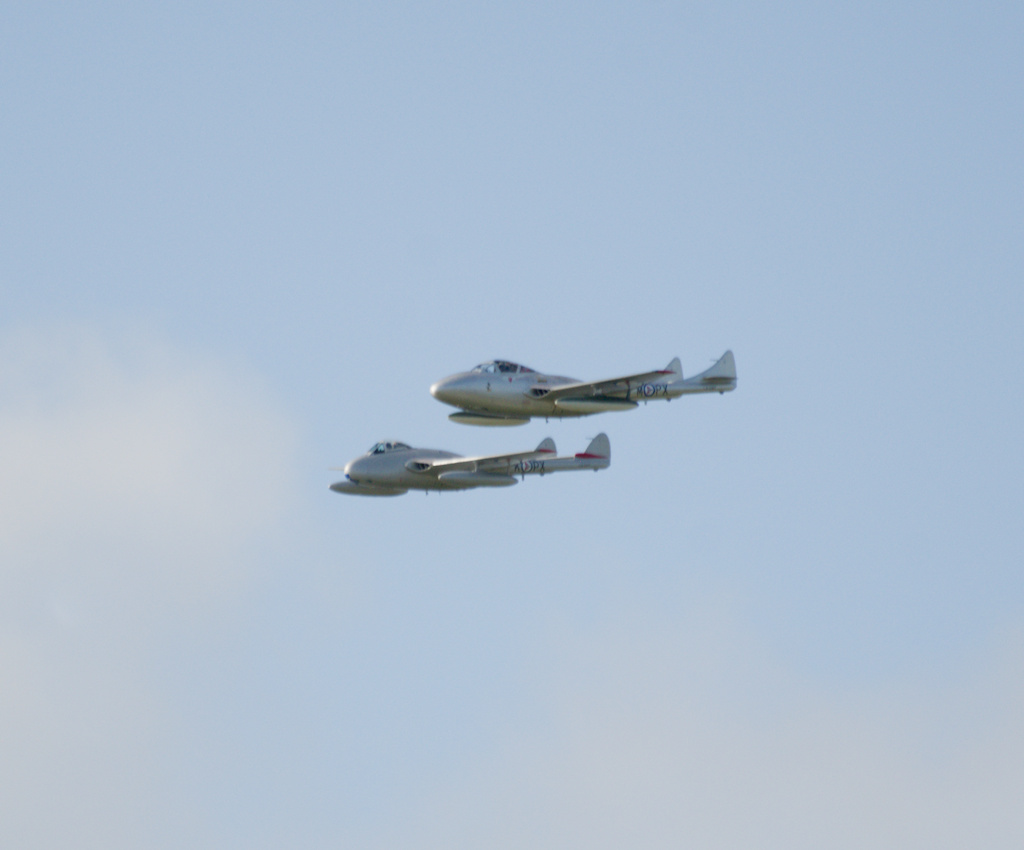
Using the Vampires, lets dive into early jet planes and engines.
Early British jet engines
The Goblin engine of the Vampires was built on the work and the 1930 patent of Frank Whittle for centrifugal compressor jet engines (a patent for an axial gas turbine engine was filed by Maxime Guillaume in 1921, but it could not be realized with the then current compressor technology). Whittle went on to co-found the Power Jets company, and build the Power Jets W.1 engine in the early 1940s, here seen from my visit to the Science Museum in London some years ago.
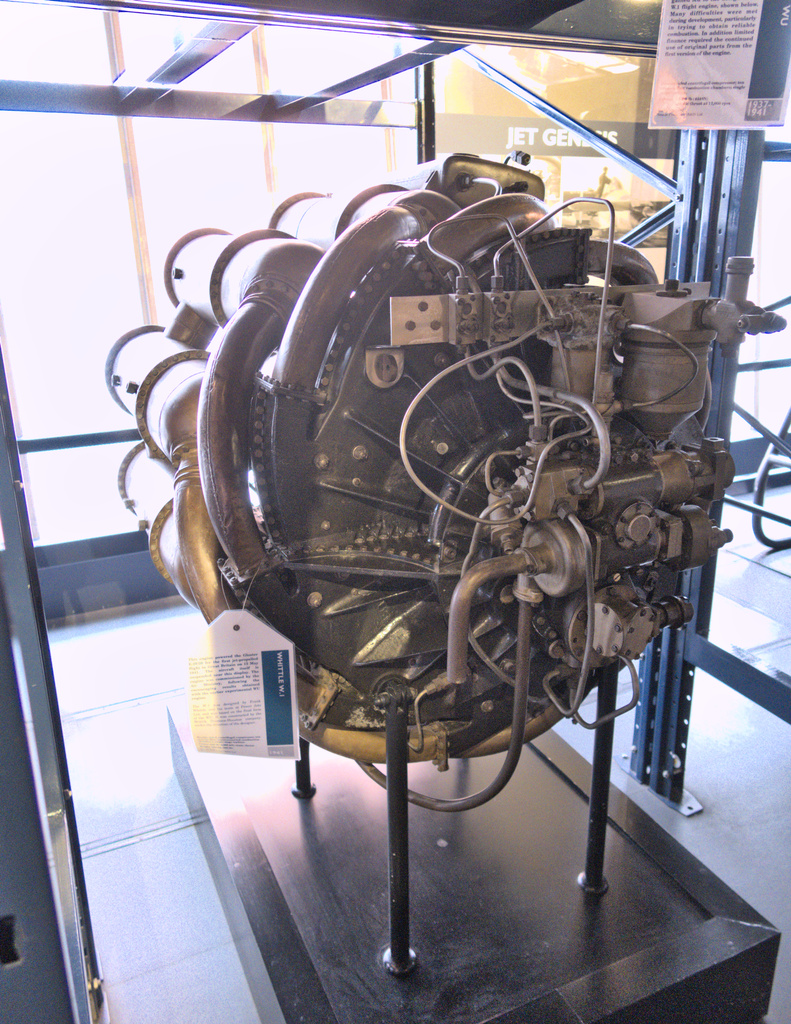
The first British jet powered flight was 15 May 1941 with the W.1 engine in the Gloster E.28/39. The actual prototype W4041 is also at display in the Science museum.
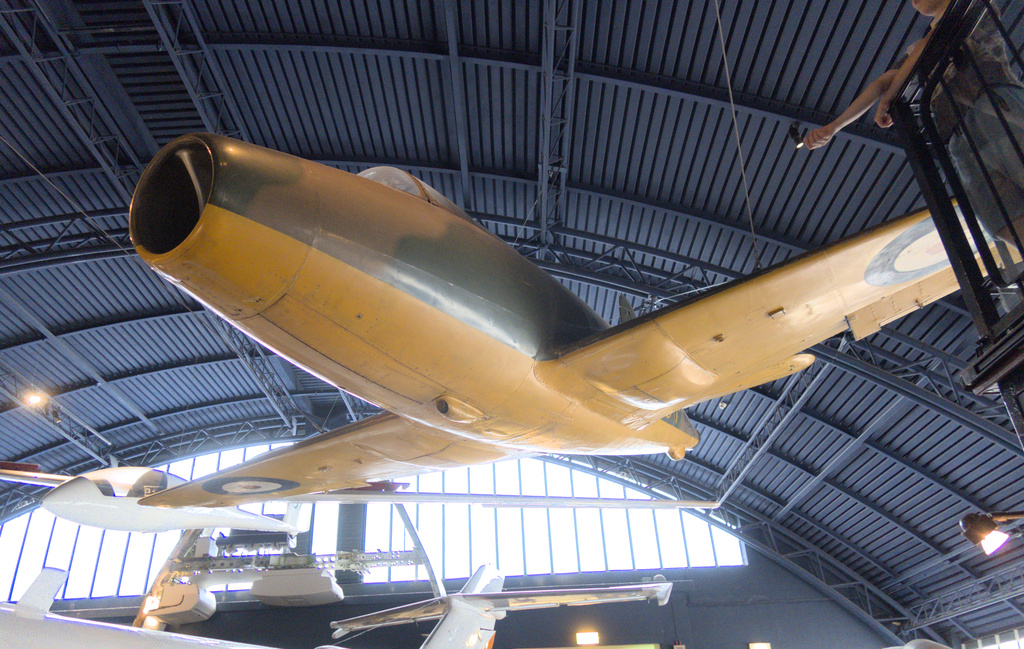
There is no doubt that the British and Frank Whittle were pioneers, and the story about the development of the centrifugal jet engine and Frank Whittles career is a fascinating tale of persistence against conservatism and war time priorities. When you have a runaway prototype that destroys itself, then you know the principles are sound, and what you now have, is an engineering problem.
Early German jet engines
I am carefully guarding my words above, because there is also a German part to the story of jet powered flight, and here the main character is Hans von Ohain. Von Ohain claims to have invented jet engines by himself, independently of Whittle, and filed a patent in 1935, five years after Whittle - he later admits to having learned about Whittles work and patent while applying for his own patent.
Von Ohain came to work with Heinkel, and the Heinkel Strahltriebwerke HeS 3 centrifugal compressor engine makes first flight in the Heinkel He 178 already 27 August 1939, two years before the first British flight. A US patent was applied for by Max Hahn from Heinkel already in May the same year, using von Ohains design.
The HeS 3 was considered to be too underpowered to be practical, so von Ohain developed the HeS 8, also known as RLM 190.001 as it was the first engine to be supported by the Nazi German Ministry of Aviation (Reichsluftfahrtministerium aka RLM). The HeS 8 took flight in the Heinkel He 280 on 30 March 1941, and thus beating the Brits and Frank Whittle a second time to jet powered flight, making the Brits “only” the thirds to achieve jet powered flight.
After this it seems that the centrifugal compressor fel out of fashion with the German engineers, and the development then focused on the axial compressor design of the BMW 003 (aka. RLM 190.003), building on von Ohains work and the BMW 002 which was deemed to be too complicated. Famously both the Messerschmitt Me 262 and the Horten Ho 229 (or Gotha Go 229) german jet aircrafts were originally designed for the BMW 003, but had to be redesigned, as the engine was delayed.
The Science Museum in London also has a BMW 003 on display.
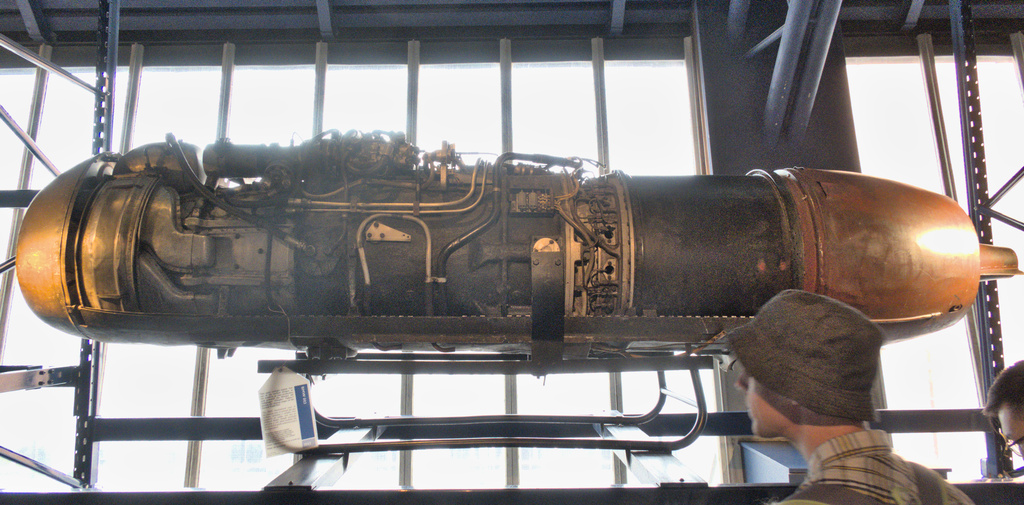
The engine to take over for the BMW 003, was the slightly smaller Junkers Jumo 004 (aka RLM 190.004), designed by Anselm Franz. Redesigning for a smaller engine is not trivial, so that delayed German jet planes. The Jumo 004 is also a axial compressor design, like the BMW 003. The first time a plane flew powered by the Jumo 004, was July 18, 1942, in a prototype Messerschmitt Me 262.
My 1/72 scale model of a Me 262 A-1a is with two Jumo 004 engines.
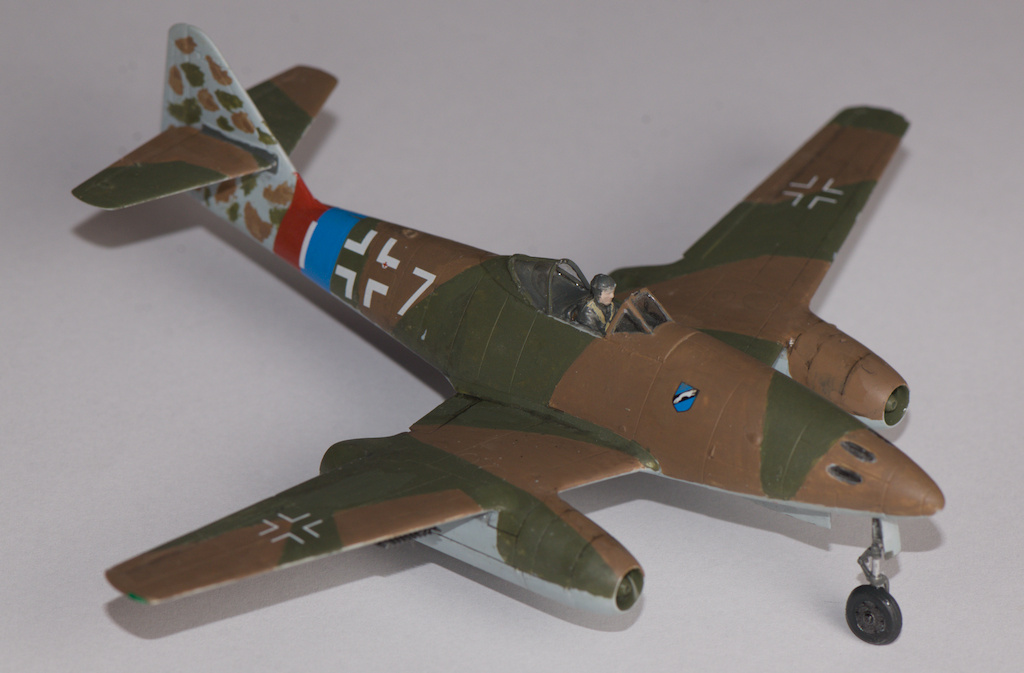
The Germans came to build 1430 Me 262 Schwalbe (including the later variant Sturmvogel), but the planes actual performance while being impressive, was hampered by the Jumo engine having to be redesigned with less strategic metals like nickel, cobalt and molybdenum leading to a very high maintenance burden (the engine was also prone to flare outs).
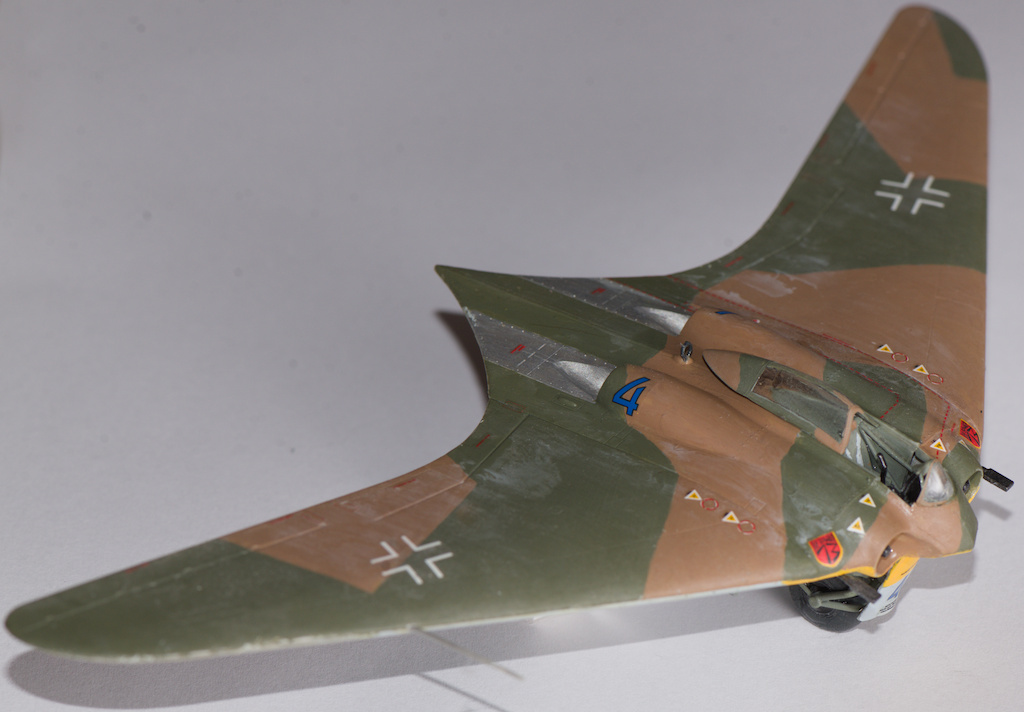
Another plane to use the Jumo 004 was the Arado Ar 234 Blitz from which 214 came to be built (the later 4-engine variants used the BMW003). Also worth mentioning is the Ho 229, where only the second prototype came to fly jet powered (before it crashed). US forces took the first three partly built production versions, so that plane never really got to fly.
I also happen to have build a scale model of the Ho 229. I have the kit for an Ar 234, that I haven’t gotten to assemble yet.
Of course the Science Museum also have a Jumo 004 engine on display.
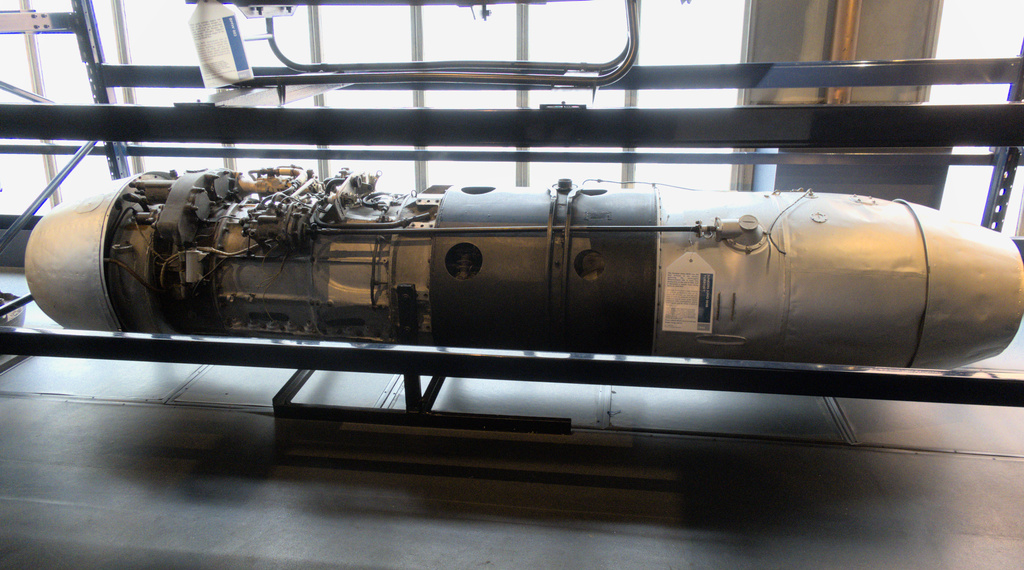
Other early jets
So, one could say, that the jet age began before the war, with Frank Whittle being the first, closely followed by Hans von Ohain, and then the Germans beat the Brits to the air during the war, only to be beaten by, amongst other, the Brits in the war. So while the jets were mostly a German thing during the war, after the war we did not really see many German jets.
One genuinely interesting plane worth mentioning here for completeness, is the Caproni Campini N.1, which is an prototype only plane, that was powered by a so called motorjet (an engine where the compressor was driven by a conventional piston engine), which first flew August 27, 1940. Thus at first celebrated at being the first jet, but was later found to be beaten by the Heinkel He 178. Not a turbojet, but more a jet than, say, a turboprop.
Returning to the Brits, the de Havilland DH100 first prototype flew September 20, 1943, and was mainly produced after the war. Over 3200 was built in Britian and 1500 abroad.
Also worth mentioning is the Gloster Meteor, which first flew March 5, 1943, and of which nearly four thousands were built. From the prototype and on, it was powered by a Rolls Royce Welland engine, originally developed by Frank Whittle and Power Jets as the W.2. The Meteor was the only jet to fly combat missions for the Allied forces during the war.
The Americans had the Lockheed P-80 Shooting Star, originally built on the Goblin engine and having maiden flight January 8, 1944. And the McDonnell FH Phantom with first flight January 26, 1945, powered by the axial compressor jet engine Westinghouse J30-WE-20. The prototype for the engine, the Westinghouse 19A is also on display at the Science Museum.
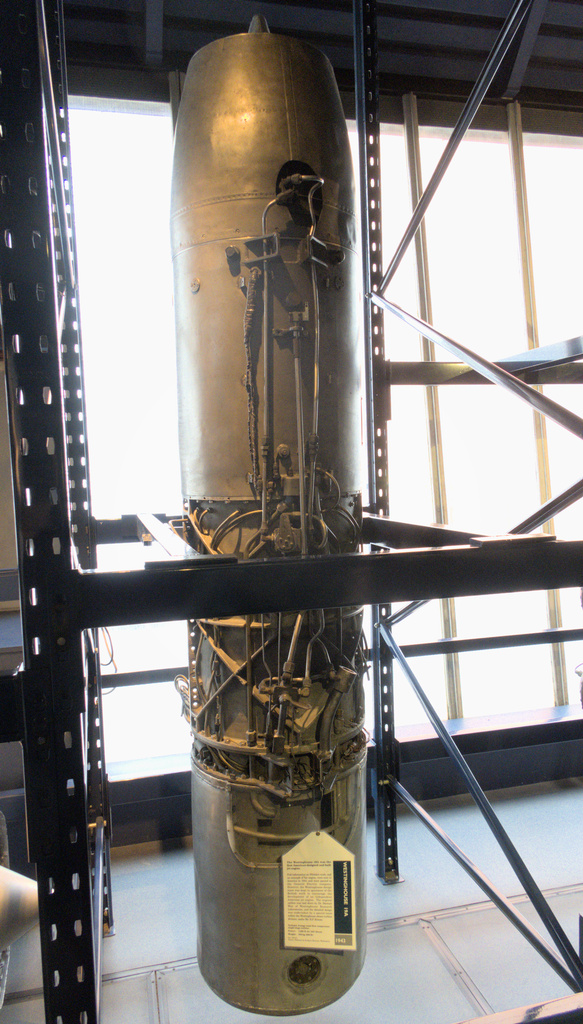
Final thoughts
The young me, the boy that grew up watching first F-104 Starfighters and later F-16 Fighting Falcons, may have had a rough idea that propeller driven fighters were WW2 era, and that jets took over after the war. But he didn’t know the history, nor that he one day would stand there, on the actual air base on the side of the main runway, and see WW2 era jet fighter flying by - nor that he would take up model building again.